
Is Koinly Safe? Honest Security Review for Crypto Investors (2026)
This article contains affiliate links. If you sign up for Koinly through a link on this page, I may earn a commission at no extra cost to you. I only recommend tools I have genuinely evaluated.
This article is for informational purposes only and does not constitute professional financial or security advice. Always apply your own security judgement when connecting third-party tools to your financial accounts.
If you are about to connect your exchange API keys to Koinly and pausing to ask is Koinly safe before proceeding — that instinct is correct. Is Koinly safe is a question every crypto investor should ask before connecting any third-party tool to their exchange accounts, and the fact that you are asking it before connecting rather than after something goes wrong is exactly the right approach to financial security.
Is Koinly safe requires a specific and honest answer rather than generic reassurance. After 30 years in finance, I understand that security questions in financial contexts deserve direct answers with the relevant caveats clearly stated — not marketing language designed to remove doubt. This guide covers what is Koinly safe means in practice, where the actual risks lie, and what you need to do to use the platform with maximum security.
By the end of this guide you will know exactly what access Koinly has to your accounts, what it cannot do regardless of how you configure it, where the genuine security risks lie, and the specific steps that reduce those risks to an acceptable level for any size of crypto portfolio.
The free plan lets you evaluate the platform before connecting anything. Start with Koinly’s free plan here.
Quick Answer: Is Koinly Safe?
Is Koinly safe? Yes — when configured correctly. Koinly uses read-only API access for exchange connections, which means it can view your transaction history but cannot place orders, withdraw funds, or interact with your account in any other way. Wallet connections use public addresses only — no private keys or seed phrases are ever required. The platform does not hold custody of any crypto assets. The honest answer to is Koinly safe is that the security model is sound, the genuine risks come from user-side configuration errors rather than from Koinly’s architecture itself, and those risks are straightforward to eliminate with the right setup approach.
Is Koinly Safe: Understanding the API Connection Model
The most important component of the is Koinly safe question is how the platform connects to your exchange accounts — because this is where most investors have legitimate security concerns.
Koinly connects to centralised exchanges via API keys. An API key is a credential that grants a specific, defined level of access to your exchange account. Is Koinly safe in terms of what API access means practically: the answer depends entirely on what permissions are attached to the API key you create. Exchange API systems allow you to specify exactly what the key can do — read transaction history, place trades, initiate withdrawals — as separate permission settings. Is Koinly safe when you create a read-only API key with trading and withdrawal permissions disabled? Yes — because a read-only key can retrieve your transaction data and nothing else.
Is Koinly safe if you accidentally create an API key with trading or withdrawal permissions enabled? The risk profile changes significantly — not because Koinly itself would misuse those permissions, but because any API key with withdrawal permissions represents a potential attack vector if your Koinly account were ever compromised. The security best practice is clear: create API keys for Koinly with read-only permissions only, explicitly verify that trading and withdrawal permissions are disabled before saving, and never reuse API keys across multiple platforms.
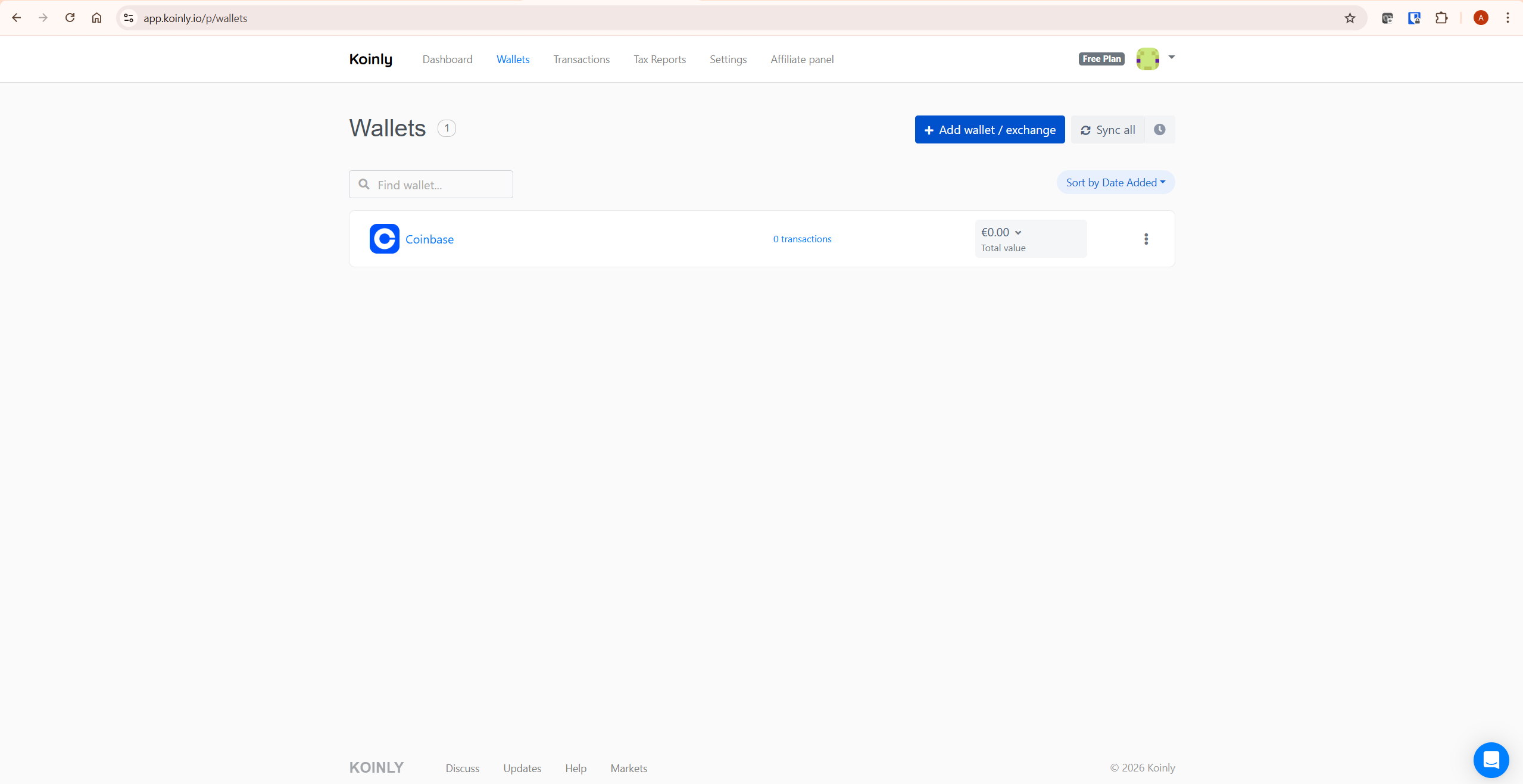
For a complete walkthrough of connecting each major exchange to Koinly with the correct read-only API settings, our how to use Koinly guide covers the setup process in detail including API permission configuration for every major exchange.
Is Koinly Safe: What Koinly Cannot Do
Is Koinly safe in terms of what the platform is architecturally incapable of doing — regardless of how it is configured? These are the hard limits that apply universally.
Koinly cannot withdraw your crypto. The platform does not have withdrawal functionality built into it at any tier or in any configuration. Even if someone gained access to your Koinly account, they could not initiate a withdrawal of your crypto assets from that account — the withdrawal function simply does not exist in the platform’s architecture.
Koinly cannot place trades on your behalf. Is Koinly safe in terms of automated trading? Yes — the platform has no trading engine. It is a calculation and reporting tool, not a trading bot or portfolio management platform.
Koinly cannot access your private keys or seed phrases. Is Koinly safe for self-custody wallet users? Yes — wallet connections use public blockchain addresses only. You paste your public wallet address and Koinly reads the on-chain transaction history from the public blockchain. Your private key — the credential that controls actual access to your wallet — is never requested, never stored, and never transmitted to Koinly or any other party. Any tool that requests your private key or seed phrase for tax reporting purposes is not a legitimate tax tool.
Koinly cannot hold custody of your assets. Is Koinly safe as a custodian? The question does not apply — Koinly is not a custodian. It never takes possession of any crypto asset. Your assets remain on your exchanges and in your wallets throughout the entire tax calculation process.
Is Koinly Safe: Wallet Connection Security
Is Koinly safe for connecting self-custody wallets — MetaMask, Ledger, Trezor, Phantom, or any other non-custodial wallet? Yes — the connection method is your public wallet address, which is already publicly visible on the blockchain.
A public wallet address is the equivalent of a bank account number — it can receive funds and its transaction history is publicly visible to anyone with a block explorer. Sharing your public address with Koinly gives the platform the ability to read your on-chain transaction history, which is the same information available to anyone who searches that address on Etherscan, Solscan, or the relevant blockchain explorer. Is Koinly safe in terms of what public address sharing reveals? It reveals your transaction history — which is already public. It does not reveal anything that was previously private.
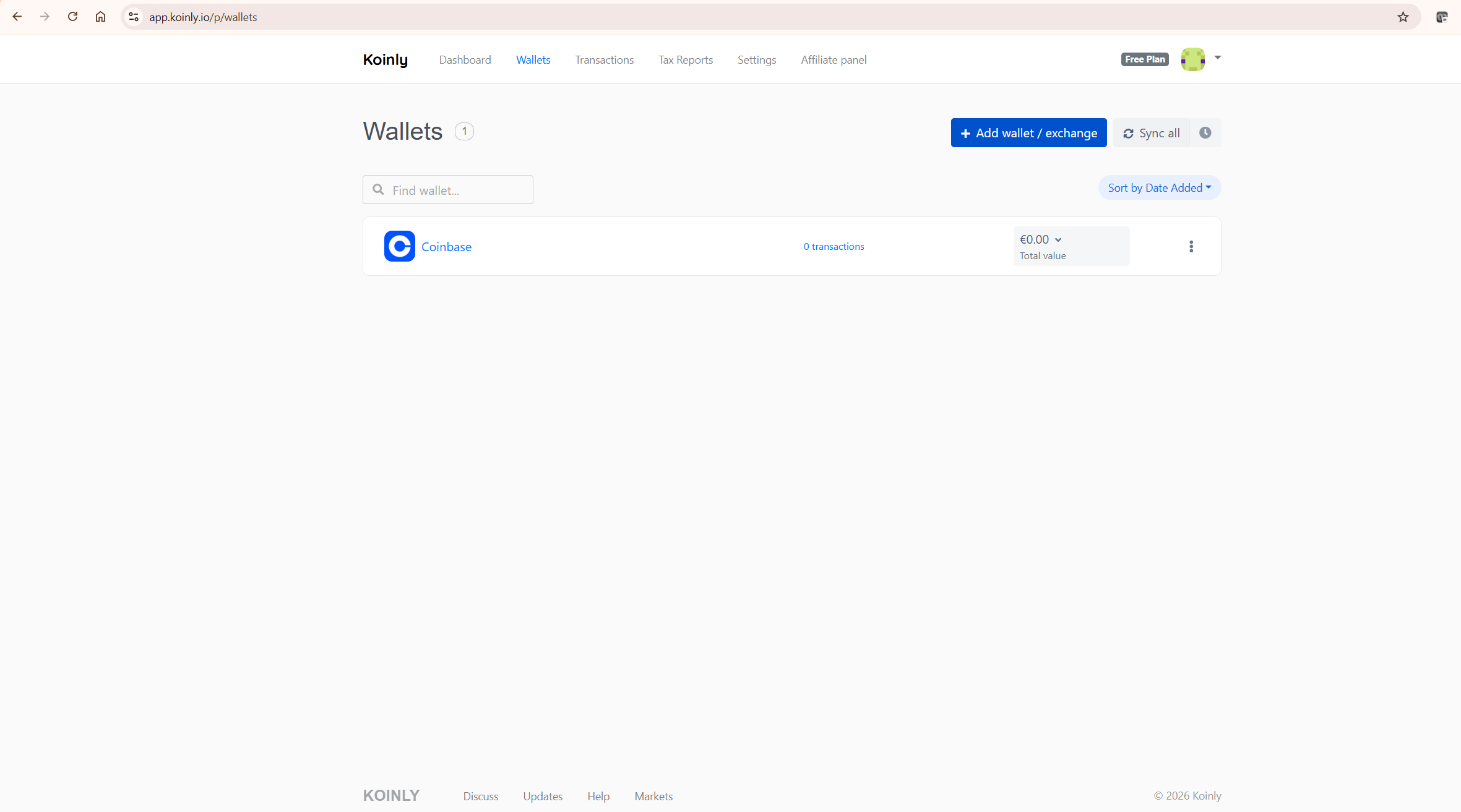
The one privacy consideration worth noting: connecting your public wallet address to Koinly creates an association between that address and your Koinly account identity. Is Koinly safe from a privacy perspective given this association? For most investors, yes — this is a necessary step in any crypto tax calculation that involves on-chain activity. If you have specific privacy concerns about blockchain address association with personal identity, consult a privacy-focused legal advisor before connecting wallet addresses to any tax platform.
Is Koinly Safe: Data Storage and Platform Security
Is Koinly safe in terms of how it stores and protects the transaction data you import? The platform uses standard enterprise cloud security practices — HTTPS encrypted connections for all data transmission, encrypted data storage, and account-level access controls.
Is Koinly safe from data breaches? No cloud-based platform can guarantee zero breach risk — this is true of every SaaS financial tool including accounting software, tax filing platforms, and banking applications. Is Koinly safe relative to the alternatives? Yes — the security model is comparable to industry-standard financial software. The data held in your Koinly account is your transaction history and calculated tax figures, not your private keys, seed phrases, or exchange login credentials.
Is Koinly safe if someone gains access to your Koinly account? They would be able to view your transaction history and tax calculations — sensitive financial information, but not credentials that would allow them to access your exchange accounts or move your crypto assets. This is why strong password hygiene and two-factor authentication on your Koinly account are important — not because account compromise would give an attacker access to your funds, but because your transaction history is sensitive personal financial data.
Is Koinly Safe: The Real Risks and How to Eliminate Them
Is Koinly safe without any user-side risk? No financial tool is completely risk-free, and honest security analysis requires identifying where the genuine risks lie. For Koinly, the real risks are specific and manageable.
Overly permissioned API keys. Is Koinly safe if you create API keys with trading or withdrawal permissions? The risk is not that Koinly misuses these permissions — it is that if your Koinly account were compromised, an attacker with access to an API key that has withdrawal permissions could potentially initiate withdrawals from your exchange. The elimination is simple: always create API keys with read-only permissions only. Verify before saving. This is the single most important security step for anyone asking is Koinly safe.
Weak Koinly account password. Is Koinly safe with a weak password? No financial account is safe with a weak password. Use a strong, unique password for your Koinly account — ideally generated by a password manager — and do not reuse passwords from your exchange accounts. If your Koinly password matches your Binance password and your Binance account is compromised, an attacker now also has access to your Koinly transaction history.
No two-factor authentication. Is Koinly safe without 2FA enabled? Significantly less so. Enable two-factor authentication on your Koinly account using an authenticator app rather than SMS if possible. This prevents account access even if your password is compromised through a data breach or phishing attack.
Phishing attempts. Is Koinly safe from phishing? The platform itself is — but user accounts are vulnerable to phishing attacks that impersonate Koinly communications. Always access Koinly by typing koinly.io directly into your browser rather than following email links, and verify that the URL matches koinly.io exactly before entering any credentials.
Is Koinly Safe for Large Portfolios?
Is Koinly safe for investors with significant crypto holdings — six-figure or seven-figure portfolios? The security model does not change based on portfolio size. The same read-only API architecture, public-address-only wallet connections, and no-custody model apply regardless of the value of assets involved.
Is Koinly safe for high-net-worth investors who want additional security assurance? The practical recommendation is the same but applied more rigorously: use hardware keys for 2FA rather than authenticator apps, rotate API keys annually and after any security event on any connected exchange, maintain a separate email address for your Koinly account that is not used for any other service, and review connected wallets and exchanges periodically to revoke any that are no longer active. According to NCSC guidance on two-factor authentication, using app-based 2FA rather than SMS provides significantly stronger protection against account compromise — relevant for any financial account including Koinly.
Is Koinly safe to use alongside a tax professional for large portfolios? Yes — and this is often the recommended approach. Koinly generates the structured transaction documentation. The tax professional provides jurisdiction-specific expertise and professional review. For a complete evaluation of Koinly’s report quality and accuracy for large portfolios, our is Koinly accurate guide covers the calculation methodology in detail.
Is Koinly Safe Compared to Other Crypto Tax Platforms?
Is Koinly safe relative to competitors like CoinTracker, CoinLedger, and TaxBit? All reputable crypto tax platforms use the same fundamental security model: read-only API access, public-address-only wallet connections, no fund custody, and cloud-based encrypted storage. According to HMRC’s cryptoassets guidance, using dedicated tax software that accesses only transaction history — not trading or withdrawal functionality — is the appropriate approach for crypto tax calculation. Koinly’s security architecture meets this standard.
Is Koinly safe compared to doing tax calculations manually in a spreadsheet? From a financial data security perspective, a local spreadsheet has lower external breach risk. From a practical accuracy perspective, manual spreadsheets are significantly more error-prone for investors with any meaningful transaction volume — and calculation errors in a tax filing create compliance risk that outweighs the marginal security benefit of keeping data local. For investors with more than 50 transactions per year, the tradeoff consistently favours structured tax software used with proper security hygiene.
Frequently Asked Questions: Is Koinly Safe?
Is Koinly safe to connect to Binance?
Is Koinly safe for Binance API connections? Yes — when you create the API key in Binance’s API Management section with read-only permissions and withdrawal permissions explicitly disabled. Binance allows granular permission control when creating API keys — verify each permission setting before saving the key. For the complete Binance connection walkthrough, our how to connect Binance to Koinly guide covers every step including the specific permission settings to apply.
Does Koinly store my API keys securely?
Is Koinly safe in terms of API key storage? Koinly stores API keys using encryption standards consistent with financial software industry practice. The more important security consideration is that even a securely stored read-only API key represents zero risk to your funds — because a read-only key cannot initiate any transaction regardless of who holds it. The risk scenario that requires concern is a key with trading or withdrawal permissions being stored anywhere outside your direct control — which is why the read-only configuration requirement is non-negotiable.
Is Koinly safe if I use a hardware wallet?
Is Koinly safe for hardware wallet users — Ledger, Trezor, Coldcard? Yes — hardware wallet connections use your public wallet address only. Your hardware wallet’s private key never leaves the device, and Koinly never requests it. The on-chain transaction history associated with your public address is what Koinly imports, which is the same data visible on any public block explorer. Hardware wallet security is not affected in any way by connecting the associated public address to Koinly.
Can I delete my data from Koinly?
Is Koinly safe in terms of data deletion? Yes — you can delete your Koinly account and associated data through the account settings. Deleting your account removes the transaction history and tax calculations stored within Koinly. It does not affect your exchange accounts, wallet addresses, or the underlying blockchain records — those exist independently of Koinly and cannot be deleted by any software platform.
Is Koinly Safe: Security Checklist
Before connecting any exchange or wallet to Koinly, work through this checklist to ensure your configuration is secure.
Create read-only API keys only — verify that trading and withdrawal permissions are explicitly disabled on every key before saving. Enable two-factor authentication on your Koinly account using an authenticator app. Use a strong, unique password for Koinly that is not shared with any exchange account. Access Koinly only by typing koinly.io directly — never via email links. Review your connected exchanges and wallets periodically and revoke keys for platforms you no longer actively use. For exchange accounts holding significant value, consider rotating API keys every 6-12 months as a routine security practice.
Is Koinly safe when this checklist is followed? Yes — the residual risk after applying these steps is comparable to any other reputable financial software tool. For the full platform evaluation including pricing and accuracy, read our complete Koinly review.
Is Koinly Safe: Final Verdict
Is Koinly safe? Yes — the platform’s security architecture is appropriate for a crypto tax calculation tool. Read-only API access, public-address-only wallet connections, no fund custody, and no private key requirements mean that Koinly’s access to your accounts is limited to exactly what tax calculation requires and nothing more. The genuine risks are user-side: overly permissioned API keys and weak account security. Both are straightforward to eliminate with the setup approach described in this guide.
Is Koinly safe enough to connect your exchanges and start calculating your crypto taxes? Yes. Start with the free plan, connect one exchange with a correctly configured read-only API key, and verify that the setup works as expected before adding additional sources. Get started with Koinly’s free plan here.
For the complete guide on getting accurate results once your connections are set up, read our is Koinly accurate guide — and for how to use the platform step by step from initial setup through to generating your tax report, our how to use Koinly guide covers every stage.
