
Semrush Pricing Explained: Best Honest Plan Breakdown for 2026
This article contains affiliate links. If you sign up for Semrush through a link on this page, I may earn a commission at no extra cost to you. I only recommend tools I have genuinely evaluated.
If you are trying to understand Semrush pricing explained clearly before committing to a subscription — or if you are currently on a plan and wondering whether you are paying for features you do not actually need — this guide gives you a straight answer. Semrush pricing explained is a question that sounds simple but has meaningful depth behind it, because the platform’s value depends entirely on whether the specific features in your plan match the specific SEO work you are actually doing.
After 30 years in finance, I evaluate tools the same way I evaluate any operational investment: what does it cost, what does it produce, and does the output justify the input at my current stage of activity? Semrush pricing explained through that lens gives a clearer answer than comparing raw monthly figures. By the end of this guide you will know exactly which plan fits your situation, what the hidden limits are that most reviews skip, and how to evaluate whether the subscription pays for itself before committing to annual billing.
Quick Answer: Semrush Pricing Explained
Semrush pricing explained in one paragraph: Semrush offers three plans — Pro, Guru, and Business — priced at approximately $139.95, $249.95, and $499.95 per month on monthly billing, with approximately 17% savings on annual billing. Pro is the right starting point for independent bloggers and affiliate site operators managing one or two websites. Guru is the right step up when you need historical data, content marketing tools, or expanded keyword tracking limits for scaling content clusters. Business is for agencies and enterprise teams managing multiple client campaigns. The single most important thing Semrush pricing explained does not tell you upfront: the plan limits on keyword tracking, projects, and daily reports are more operationally significant than the feature differences between tiers.
Semrush Pricing Explained: The Three Plans
Semrush pricing explained starts with the three subscription tiers and what each one actually includes for the money.
The Pro plan is the entry point and the correct starting plan for most independent website operators. Semrush pricing explained at the Pro tier: you get full access to keyword research tools, site audit functionality, backlink analytics, position tracking for up to 500 keywords, and five projects. For bloggers and affiliate marketers learning structured SEO workflows — including how to do keyword research with Semrush, how to run site audits, and how to monitor rankings — the Pro plan covers every tool you need. The constraint is the limit on tracked keywords and projects, which becomes relevant as your site grows.
The Guru plan expands the Pro plan’s limits meaningfully and unlocks two features that matter specifically for scaling content operations: historical keyword data going back years, and the Content Marketing Platform which includes topic research, content templates, and the SEO Writing Assistant. Semrush pricing explained at the Guru tier: you get 1,500 tracked keywords, 15 projects, and the historical data that makes trend analysis and long-term competitor tracking genuinely useful. For operators running structured content cluster strategies across multiple sites, Guru is typically the most balanced option.
The Business plan is designed for agencies and enterprise teams. Semrush pricing explained at the Business tier: you get 5,000 tracked keywords, 40 projects, API access for programmatic data extraction, and Share of Voice reporting. Unless you manage multiple client campaigns simultaneously or run a large-scale content operation with dozens of tracked properties, this plan represents significant overpayment for most individual operators.
Semrush Pricing Explained: Monthly vs Annual Billing
Semrush pricing explained on billing cycles: monthly billing gives you flexibility to cancel or change plans without commitment. Annual billing reduces the effective monthly cost by approximately 17% — saving roughly $280 per year on Pro, $500 on Guru, and $1,000 on Business.
The practical recommendation: start on monthly billing for 60-90 days. Use that period to evaluate whether the plan’s keyword tracking limit constrains your workflow, whether the position tracking data is genuinely informing your content decisions, and whether the competitor analysis tools are producing actionable insights rather than interesting-but-unused data. If after 90 days the platform is integrated into your weekly workflow, switch to annual billing for the savings. Semrush pricing explained correctly means not committing annually before you have validated the tool fits your actual working process.
Semrush Pricing Explained: The Hidden Limits That Matter Most
Semrush pricing explained at the feature level is widely covered. What most guides skip is the operational significance of the usage limits that come with each plan — and these limits matter more than the feature differences between tiers for most users.
Keyword tracking limits. Semrush pricing explained on tracked keywords: Pro allows 500, Guru allows 1,500, Business allows 5,000. For a site publishing four articles per week across multiple content clusters, 500 tracked keywords fills up faster than you might expect. Once you hit the limit, adding new keywords requires removing existing ones — which breaks your historical trend data for removed terms. If your content strategy involves tracking primary keywords plus long-tail variations and comparison modifiers across multiple clusters, the Pro limit becomes a genuine operational constraint within 6-12 months of consistent publishing.
Project limits. Semrush pricing explained on projects: Pro allows 5, Guru allows 15, Business allows 40. Each website you want to audit, track rankings for, and run backlink analysis on requires a separate project. If you manage multiple sites or want to track competitors as separate projects, the Pro plan’s five-project limit is reached quickly.
Daily report limits. Pro allows 3,000 results per report and 10,000 results per day. These limits affect how much keyword research and competitor analysis you can run in a single session. For systematic research sessions covering large keyword sets, these limits can throttle your workflow.
Site audit crawl capacity. Pro crawls 100,000 pages per month, Guru crawls 300,000. For sites with thousands of indexed pages, insufficient crawl limits prevent comprehensive technical SEO monitoring. This is less relevant for new sites but becomes meaningful as content volume grows.
Semrush Pricing Explained: What You Are Actually Paying For
Semrush pricing explained correctly means understanding that you are paying for structured decision-making infrastructure, not just keyword suggestions. The platform combines keyword research, competitor analysis, site auditing, backlink tracking, and rank monitoring in a single interface. This consolidation eliminates the workflow fragmentation that comes from using separate tools for each function.
Operators who use multiple standalone tools — one for keyword research, another for backlink data, a third for rank monitoring — introduce data inconsistency across platforms and spend meaningful time reconciling information from different sources. Semrush pricing explained through the consolidation lens: the subscription cost often competes favourably with the combined cost of three or four standalone tools, while eliminating the operational overhead of managing multiple logins and data formats.
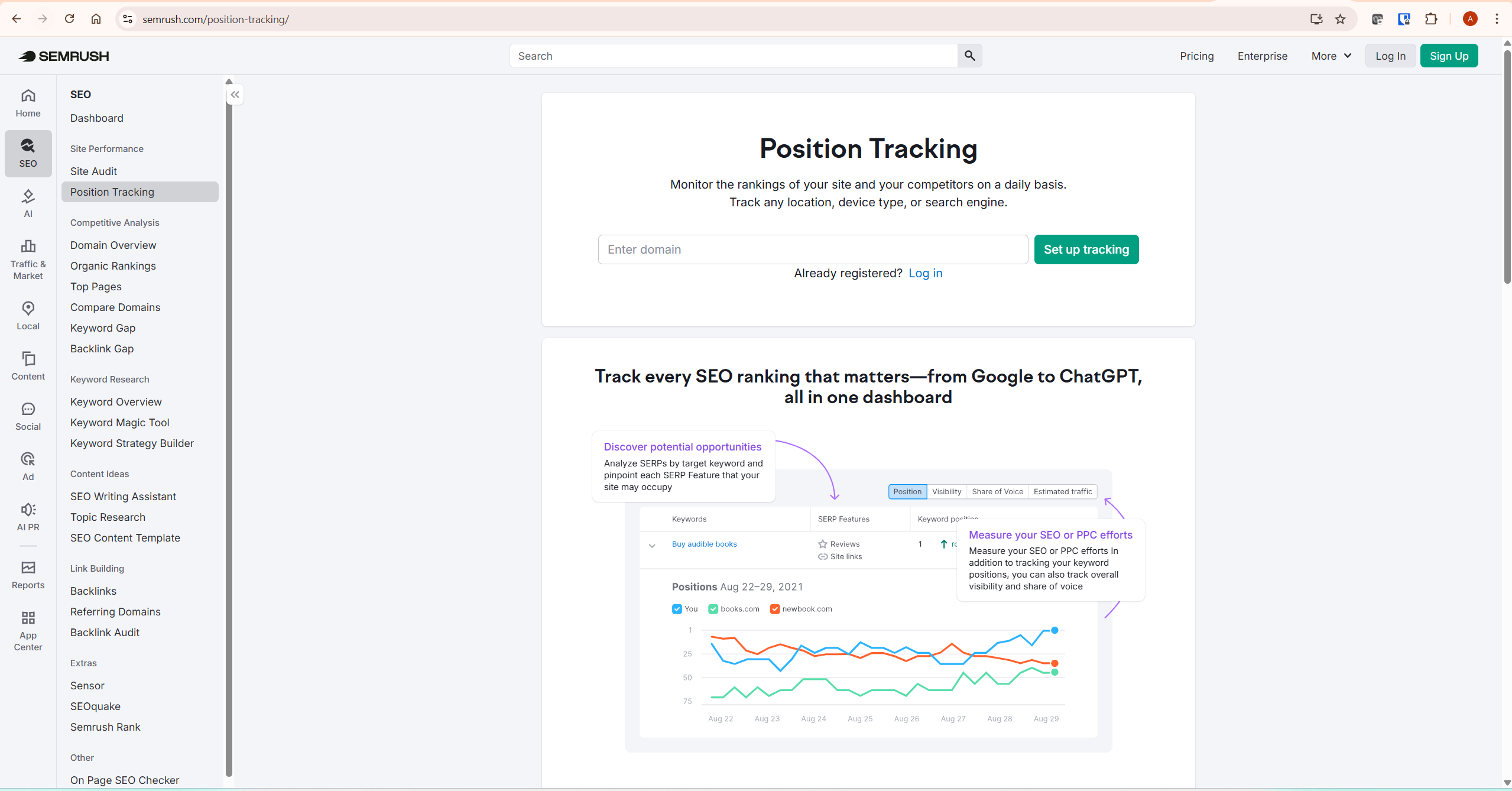
For a practical demonstration of how Semrush’s tools work together in a structured research workflow, our guide on how to do keyword research with Semrush covers the process end-to-end. And for understanding how Position Tracking specifically turns data into actionable ranking insights, our how to use Semrush Position Tracking guide walks through the setup and interpretation in detail.
Semrush Pricing Explained: Evaluating ROI Before Committing
Semrush pricing explained through an ROI framework gives a more useful answer than raw monthly cost comparison. The question is not whether Semrush is expensive — it is whether the platform reduces content misfires and improves ranking precision enough to justify the subscription.
A useful framework: cost-per-optimised-article. If you publish four well-researched articles per month on the Pro plan, the effective cost per article is approximately $35. When even one of those articles ranks consistently for a primary keyword and its long-tail variations, the traffic and affiliate revenue generated over 12-24 months typically exceeds the annual subscription cost many times over. Semrush pricing explained over a compounding timeline looks very different from Semrush pricing explained as a monthly expense line.
According to Backlinko’s analysis of SEO tools, Semrush is consistently ranked among the most comprehensive platforms for keyword research and competitor intelligence — making it a benchmark tool for serious SEO practitioners rather than a discretionary add-on. The key qualifier in that analysis is “serious” — Semrush pricing explained makes most sense for operators who publish consistently and track ranking performance systematically, not for casual bloggers who post occasionally without measuring results.
Semrush Pricing Explained: When It Does Not Make Sense
Semrush pricing explained honestly requires acknowledging when the subscription is not justified.
Semrush pricing explained does not make sense if you publish infrequently — less than once per week — because the keyword research and tracking infrastructure is underutilised at low publishing volumes. It does not make sense if you have not yet validated your niche direction, because committing to a structured SEO platform before you know what you are optimising for wastes the tool’s core value. It does not make sense if your primary traffic acquisition strategy is paid advertising or social media rather than organic search, because the platform is built around search visibility.
Semrush pricing explained also does not make sense as a replacement for consistent content execution. The platform improves the quality of decisions around what to write and how to optimise it — but it cannot compensate for not writing. Operators who subscribe but do not implement a structured publishing workflow are paying for capability they are not using.
Semrush Pricing Explained: How to Choose the Right Plan
Semrush pricing explained as a decision framework based on your specific situation.
Choose Pro if you operate one or two primary sites, publish two to four articles per week, track a focused set of primary keywords per cluster, and do not need historical data or content marketing tools. This is the correct starting point for most independent affiliate bloggers and solo operators. Semrush pricing explained at the Pro tier is a justified operational investment when publishing consistently and measuring results.
Choose Guru if you are running structured content cluster strategies across multiple sites, need historical keyword data for trend analysis, want access to the Content Marketing Platform for topic research and content optimisation, or are hitting the Pro plan’s keyword tracking limit consistently. Semrush pricing explained at the Guru tier is justified when the additional tracking capacity and historical data are actively informing content decisions rather than sitting unused.
Choose Business only if you manage multiple client SEO campaigns simultaneously, need API access for programmatic data use, or operate a large-scale content property requiring 5,000+ tracked keywords. For individual operators and small teams, Semrush pricing explained at the Business tier is almost always overpayment.
If you are evaluating whether the investment makes sense for your specific stage and niche, our guide on is Semrush worth it covers the ROI analysis in detail for different operator profiles.
Semrush Pricing Explained: The Compounding Value Argument
Semrush pricing explained from a long-term compounding perspective produces a very different assessment than month-to-month cost evaluation. SEO performance compounds over time — a single well-optimised article can generate consistent organic traffic and affiliate conversions for years. The keyword research and competitor analysis that Semrush enables directly improves the probability that each article ranks for its target terms and captures related long-tail traffic.
Operators who evaluate Semrush pricing explained over a 12-24 month horizon rather than a single billing cycle consistently find the ROI calculation more favourable. One article that ranks on page one for a medium-difficulty keyword generating 500 monthly visitors and 2% affiliate conversion at an average commission can produce several hundred euros per month in recurring income — from a single content piece informed by Semrush research. Semrush pricing explained as a cost-per-ranking-article rather than a monthly subscription changes the framing entirely.
According to Search Engine Journal’s analysis of SEO importance, organic search remains the highest-ROI digital marketing channel for most content-based businesses — making the tools that improve organic search performance a justified operational investment for serious content operators.
Frequently Asked Questions: Semrush Pricing Explained
Does Semrush have a free plan?
Semrush pricing explained on free access: Semrush offers limited free access that allows you to run a small number of keyword searches and site audits before requiring a subscription. This is a genuine evaluation tool — you can assess the data quality and interface before committing. There is no permanent full-feature free plan. The free access is useful for a one-time evaluation but not for ongoing SEO work.
Is Semrush pricing explained the same for all countries?
Semrush pricing is denominated in USD and applies globally, though local taxes may vary. For EU-based operators including those in Cyprus, the pricing is the same as for US users — the distinction is VAT treatment at checkout. Annual billing saves approximately 17% regardless of location. Semrush pricing explained for international operators: the subscription cost in euros or other currencies fluctuates with exchange rates, so annual billing provides more cost predictability than monthly.
Can I switch plans after subscribing?
Semrush pricing explained on plan flexibility: yes — you can upgrade or downgrade your Semrush plan at any time. Upgrading mid-cycle is prorated. Downgrading takes effect at the next billing cycle. This flexibility makes it reasonable to start on Pro, evaluate your actual usage against the limits over 60-90 days, and upgrade to Guru only when the Pro limits are genuinely constraining your workflow rather than speculatively.
What happens to my data if I cancel Semrush?
Semrush pricing explained on data retention: if you cancel your subscription, your project data — tracked keywords, position history, site audit results — is retained for a period but eventually cleared. Before cancelling, export your position tracking history and any keyword lists you want to preserve. Your data inside Semrush is associated with your account, not stored locally, so export before cancellation is important for continuity.
Semrush Pricing Explained: Final Verdict
Semrush pricing explained honestly: it is not a budget tool, and it should not be evaluated as one. It is a structured growth platform that produces its best ROI for operators who publish consistently, track performance systematically, and make content decisions based on data rather than intuition. At that operating standard, the Pro plan is a justified investment, the Guru plan becomes justified as content volume scales, and the Business plan remains relevant only for agency-scale operations.
The practical starting point: use monthly billing on the Pro plan for 90 days. If you are using position tracking weekly, running keyword research before every article, and making competitor gap analysis part of your content planning — the subscription is working. If the tools are sitting unused between publishing sessions, reconsider whether your publishing volume justifies the cost at this stage.
Semrush pricing explained as a decision: it is not about whether you can afford it. It is about whether your current publishing discipline and growth strategy will actually use what you are paying for. For operators at that standard, our full Semrush review covers everything the platform offers across all three plan tiers.
This article contains affiliate links. If you sign up for Semrush through a link on this page, I may earn a commission at no extra cost to you. I only recommend tools I have genuinely evaluated.
If you are trying to understand Semrush pricing explained clearly before committing to a subscription — or if you are currently on a plan and wondering whether you are paying for features you do not actually need — this guide gives you a straight answer. Semrush pricing explained is a question that sounds simple but has meaningful depth behind it, because the platform’s value depends entirely on whether the specific features in your plan match the specific SEO work you are actually doing.
After 30 years in finance, I evaluate tools the same way I evaluate any operational investment: what does it cost, what does it produce, and does the output justify the input at my current stage of activity? Semrush pricing explained through that lens gives a clearer answer than comparing raw monthly figures. By the end of this guide you will know exactly which plan fits your situation, what the hidden limits are that most reviews skip, and how to evaluate whether the subscription pays for itself before committing to annual billing.
Quick Answer: Semrush Pricing Explained
Semrush pricing explained in one paragraph: Semrush offers three plans — Pro, Guru, and Business — priced at approximately $139.95, $249.95, and $499.95 per month on monthly billing, with approximately 17% savings on annual billing. Pro is the right starting point for independent bloggers and affiliate site operators managing one or two websites. Guru is the right step up when you need historical data, content marketing tools, or expanded keyword tracking limits for scaling content clusters. Business is for agencies and enterprise teams managing multiple client campaigns. The single most important thing Semrush pricing explained does not tell you upfront: the plan limits on keyword tracking, projects, and daily reports are more operationally significant than the feature differences between tiers.
Semrush Pricing Explained: The Three Plans
Semrush pricing explained starts with the three subscription tiers and what each one actually includes for the money.
The Pro plan is the entry point and the correct starting plan for most independent website operators. Semrush pricing explained at the Pro tier: you get full access to keyword research tools, site audit functionality, backlink analytics, position tracking for up to 500 keywords, and five projects. For bloggers and affiliate marketers learning structured SEO workflows — including how to do keyword research with Semrush, how to run site audits, and how to monitor rankings — the Pro plan covers every tool you need. The constraint is the limit on tracked keywords and projects, which becomes relevant as your site grows.
The Guru plan expands the Pro plan’s limits meaningfully and unlocks two features that matter specifically for scaling content operations: historical keyword data going back years, and the Content Marketing Platform which includes topic research, content templates, and the SEO Writing Assistant. Semrush pricing explained at the Guru tier: you get 1,500 tracked keywords, 15 projects, and the historical data that makes trend analysis and long-term competitor tracking genuinely useful. For operators running structured content cluster strategies across multiple sites, Guru is typically the most balanced option.
The Business plan is designed for agencies and enterprise teams. Semrush pricing explained at the Business tier: you get 5,000 tracked keywords, 40 projects, API access for programmatic data extraction, and Share of Voice reporting. Unless you manage multiple client campaigns simultaneously or run a large-scale content operation with dozens of tracked properties, this plan represents significant overpayment for most individual operators.
Semrush Pricing Explained: Monthly vs Annual Billing
Semrush pricing explained on billing cycles: monthly billing gives you flexibility to cancel or change plans without commitment. Annual billing reduces the effective monthly cost by approximately 17% — saving roughly $280 per year on Pro, $500 on Guru, and $1,000 on Business.
The practical recommendation: start on monthly billing for 60-90 days. Use that period to evaluate whether the plan’s keyword tracking limit constrains your workflow, whether the position tracking data is genuinely informing your content decisions, and whether the competitor analysis tools are producing actionable insights rather than interesting-but-unused data. If after 90 days the platform is integrated into your weekly workflow, switch to annual billing for the savings. Semrush pricing explained correctly means not committing annually before you have validated the tool fits your actual working process.
Semrush Pricing Explained: The Hidden Limits That Matter Most
Semrush pricing explained at the feature level is widely covered. What most guides skip is the operational significance of the usage limits that come with each plan — and these limits matter more than the feature differences between tiers for most users.
Keyword tracking limits. Semrush pricing explained on tracked keywords: Pro allows 500, Guru allows 1,500, Business allows 5,000. For a site publishing four articles per week across multiple content clusters, 500 tracked keywords fills up faster than you might expect. Once you hit the limit, adding new keywords requires removing existing ones — which breaks your historical trend data for removed terms. If your content strategy involves tracking primary keywords plus long-tail variations and comparison modifiers across multiple clusters, the Pro limit becomes a genuine operational constraint within 6-12 months of consistent publishing.
Project limits. Semrush pricing explained on projects: Pro allows 5, Guru allows 15, Business allows 40. Each website you want to audit, track rankings for, and run backlink analysis on requires a separate project. If you manage multiple sites or want to track competitors as separate projects, the Pro plan’s five-project limit is reached quickly.
Daily report limits. Pro allows 3,000 results per report and 10,000 results per day. These limits affect how much keyword research and competitor analysis you can run in a single session. For systematic research sessions covering large keyword sets, these limits can throttle your workflow.
Site audit crawl capacity. Pro crawls 100,000 pages per month, Guru crawls 300,000. For sites with thousands of indexed pages, insufficient crawl limits prevent comprehensive technical SEO monitoring. This is less relevant for new sites but becomes meaningful as content volume grows.
Semrush Pricing Explained: What You Are Actually Paying For
Semrush pricing explained correctly means understanding that you are paying for structured decision-making infrastructure, not just keyword suggestions. The platform combines keyword research, competitor analysis, site auditing, backlink tracking, and rank monitoring in a single interface. This consolidation eliminates the workflow fragmentation that comes from using separate tools for each function.
Operators who use multiple standalone tools — one for keyword research, another for backlink data, a third for rank monitoring — introduce data inconsistency across platforms and spend meaningful time reconciling information from different sources. Semrush pricing explained through the consolidation lens: the subscription cost often competes favourably with the combined cost of three or four standalone tools, while eliminating the operational overhead of managing multiple logins and data formats.
For a practical demonstration of how Semrush’s tools work together in a structured research workflow, our guide on how to do keyword research with Semrush covers the process end-to-end. And for understanding how Position Tracking specifically turns data into actionable ranking insights, our how to use Semrush Position Tracking guide walks through the setup and interpretation in detail.
Semrush Pricing Explained: Evaluating ROI Before Committing
Semrush pricing explained through an ROI framework gives a more useful answer than raw monthly cost comparison. The question is not whether Semrush is expensive — it is whether the platform reduces content misfires and improves ranking precision enough to justify the subscription.
A useful framework: cost-per-optimised-article. If you publish four well-researched articles per month on the Pro plan, the effective cost per article is approximately $35. When even one of those articles ranks consistently for a primary keyword and its long-tail variations, the traffic and affiliate revenue generated over 12-24 months typically exceeds the annual subscription cost many times over. Semrush pricing explained over a compounding timeline looks very different from Semrush pricing explained as a monthly expense line.
According to Backlinko’s analysis of SEO tools, Semrush is consistently ranked among the most comprehensive platforms for keyword research and competitor intelligence — making it a benchmark tool for serious SEO practitioners rather than a discretionary add-on. The key qualifier in that analysis is “serious” — Semrush pricing explained makes most sense for operators who publish consistently and track ranking performance systematically, not for casual bloggers who post occasionally without measuring results.
Semrush Pricing Explained: When It Does Not Make Sense
Semrush pricing explained honestly requires acknowledging when the subscription is not justified.
Semrush pricing explained does not make sense if you publish infrequently — less than once per week — because the keyword research and tracking infrastructure is underutilised at low publishing volumes. It does not make sense if you have not yet validated your niche direction, because committing to a structured SEO platform before you know what you are optimising for wastes the tool’s core value. It does not make sense if your primary traffic acquisition strategy is paid advertising or social media rather than organic search, because the platform is built around search visibility.
Semrush pricing explained also does not make sense as a replacement for consistent content execution. The platform improves the quality of decisions around what to write and how to optimise it — but it cannot compensate for not writing. Operators who subscribe but do not implement a structured publishing workflow are paying for capability they are not using.
Semrush Pricing Explained: How to Choose the Right Plan
Semrush pricing explained as a decision framework based on your specific situation.
Choose Pro if you operate one or two primary sites, publish two to four articles per week, track a focused set of primary keywords per cluster, and do not need historical data or content marketing tools. This is the correct starting point for most independent affiliate bloggers and solo operators. Semrush pricing explained at the Pro tier is a justified operational investment when publishing consistently and measuring results.
Choose Guru if you are running structured content cluster strategies across multiple sites, need historical keyword data for trend analysis, want access to the Content Marketing Platform for topic research and content optimisation, or are hitting the Pro plan’s keyword tracking limit consistently. Semrush pricing explained at the Guru tier is justified when the additional tracking capacity and historical data are actively informing content decisions rather than sitting unused.
Choose Business only if you manage multiple client SEO campaigns simultaneously, need API access for programmatic data use, or operate a large-scale content property requiring 5,000+ tracked keywords. For individual operators and small teams, Semrush pricing explained at the Business tier is almost always overpayment.
If you are evaluating whether the investment makes sense for your specific stage and niche, our guide on is Semrush worth it covers the ROI analysis in detail for different operator profiles.
Semrush Pricing Explained: The Compounding Value Argument
Semrush pricing explained from a long-term compounding perspective produces a very different assessment than month-to-month cost evaluation. SEO performance compounds over time — a single well-optimised article can generate consistent organic traffic and affiliate conversions for years. The keyword research and competitor analysis that Semrush enables directly improves the probability that each article ranks for its target terms and captures related long-tail traffic.
Operators who evaluate Semrush pricing explained over a 12-24 month horizon rather than a single billing cycle consistently find the ROI calculation more favourable. One article that ranks on page one for a medium-difficulty keyword generating 500 monthly visitors and 2% affiliate conversion at an average commission can produce several hundred euros per month in recurring income — from a single content piece informed by Semrush research. Semrush pricing explained as a cost-per-ranking-article rather than a monthly subscription changes the framing entirely.
According to Search Engine Journal’s analysis of SEO importance, organic search remains the highest-ROI digital marketing channel for most content-based businesses — making the tools that improve organic search performance a justified operational investment for serious content operators.
Frequently Asked Questions: Semrush Pricing Explained
Does Semrush have a free plan?
Semrush pricing explained on free access: Semrush offers limited free access that allows you to run a small number of keyword searches and site audits before requiring a subscription. This is a genuine evaluation tool — you can assess the data quality and interface before committing. There is no permanent full-feature free plan. The free access is useful for a one-time evaluation but not for ongoing SEO work.
Is Semrush pricing explained the same for all countries?
Semrush pricing is denominated in USD and applies globally, though local taxes may vary. For EU-based operators including those in Cyprus, the pricing is the same as for US users — the distinction is VAT treatment at checkout. Annual billing saves approximately 17% regardless of location. Semrush pricing explained for international operators: the subscription cost in euros or other currencies fluctuates with exchange rates, so annual billing provides more cost predictability than monthly.
Can I switch plans after subscribing?
Semrush pricing explained on plan flexibility: yes — you can upgrade or downgrade your Semrush plan at any time. Upgrading mid-cycle is prorated. Downgrading takes effect at the next billing cycle. This flexibility makes it reasonable to start on Pro, evaluate your actual usage against the limits over 60-90 days, and upgrade to Guru only when the Pro limits are genuinely constraining your workflow rather than speculatively.
What happens to my data if I cancel Semrush?
Semrush pricing explained on data retention: if you cancel your subscription, your project data — tracked keywords, position history, site audit results — is retained for a period but eventually cleared. Before cancelling, export your position tracking history and any keyword lists you want to preserve. Your data inside Semrush is associated with your account, not stored locally, so export before cancellation is important for continuity.
Semrush Pricing Explained: Final Verdict
Semrush pricing explained honestly: it is not a budget tool, and it should not be evaluated as one. It is a structured growth platform that produces its best ROI for operators who publish consistently, track performance systematically, and make content decisions based on data rather than intuition. At that operating standard, the Pro plan is a justified investment, the Guru plan becomes justified as content volume scales, and the Business plan remains relevant only for agency-scale operations.
The practical starting point: use monthly billing on the Pro plan for 90 days. If you are using position tracking weekly, running keyword research before every article, and making competitor gap analysis part of your content planning — the subscription is working. If the tools are sitting unused between publishing sessions, reconsider whether your publishing volume justifies the cost at this stage.
Semrush pricing explained as a decision: it is not about whether you can afford it. It is about whether your current publishing discipline and growth strategy will actually use what you are paying for. For operators at that standard, our full Semrush review covers everything the platform offers across all three plan tiers.