
Is Koinly Accurate? Honest 2026 Review of Its Crypto Tax Calculations
This article contains affiliate links. If you sign up for Koinly through a link on this page, I may earn a commission at no extra cost to you. I only recommend tools I have genuinely evaluated.
This article is for informational purposes only and does not constitute professional tax or financial advice. Tax laws vary by country and change frequently. Consult a qualified tax professional for advice specific to your situation.
If you have imported your crypto transactions into Koinly and the gains figure looks completely wrong — either wildly too high or suspiciously too low — or if you are evaluating whether to trust the platform’s calculations before filing your taxes, this guide answers the accuracy question with the specific detail and honesty that most reviews avoid. An inaccurate report filed with a tax authority creates problems that are significantly more difficult to resolve than taking the time to get it right in the first place.
The honest answer, from 30 years in finance, is that Koinly is accurate when given complete data and when users review what it flags. It is not accurate when data sources are missing or flagged transactions are ignored. I am Andreas Maratheftis, and understanding exactly where that line falls is what this guide covers.
By the end of this guide you will know precisely where Koinly’s calculations are reliable, where human review is essential, why most reported inaccuracies are actually data problems rather than calculation errors, and what steps produce the most accurate possible result from the platform.
The free plan lets you import and review your data before paying anything. Start with Koinly’s free plan here.
Quick Answer: Is Koinly Accurate?
For standard crypto activity — exchange trades, wallet transfers, staking rewards, and straightforward NFT transactions — Koinly is highly reliable when all data sources are correctly imported. For complex DeFi activity — auto-compounding yield farming, exotic bridge transactions, and novel protocol interactions — it handles more than most competing tools but complex scenarios require manual review. When data sources are missing or flagged transactions are unresolved, the output will be wrong. The platform’s calculation engine is sound. The accuracy depends entirely on the completeness of the data you feed into it.
Accuracy by Activity Type: At a Glance
Before the detailed breakdown, here is how Koinly’s accuracy maps to different activity types.
| Activity Type | Accuracy Level | Manual Review Needed? |
|---|---|---|
| Exchange trades (buy/sell) | High — automated and reliable | Minimal |
| Crypto-to-crypto trades | High — correct disposal treatment | Minimal |
| Wallet-to-wallet transfers | High — when both wallets connected | Only if wallet missing |
| Staking rewards | High for major protocols | Verify income classification |
| Common DeFi (Uniswap, Lido) | Good — most scenarios automated | Moderate |
| Complex DeFi (auto-compounding, bridges) | Partial — novel protocols need review | High |
| Missing wallets or unresolved flags | Unreliable — data problem, not engine error | Fix data first |
What “Accurate” Actually Means for Crypto Tax Software
Crypto tax accuracy has three components. The first is data completeness — whether all relevant transactions have been imported from every exchange, wallet, and blockchain that holds or has ever held your assets. The second is event classification — whether each transaction is correctly identified as a trade, transfer, income event, DeFi interaction, or NFT transaction. The third is calculation correctness — whether the gain or loss for each taxable event is calculated using the correct cost basis, disposal value, fee treatment, and accounting method for your jurisdiction.
Koinly’s calculation engine is generally reliable when provided with complete and correctly classified transaction data. The first component is entirely in the user’s control. The second is mostly automated but requires review for complex scenarios. According to IRS digital assets guidance, accurate crypto tax reporting requires documenting every taxable event — which means the overall accuracy depends directly on whether every taxable event has been imported and correctly classified.
For a complete overview of the platform including pricing, DeFi support, and report quality, our Koinly review covers everything in detail.
Exchange Trades: Where Koinly Is Most Reliable
Standard centralised exchange trading is where the platform’s automation is most reliable and requires the least manual intervention.
For buy and sell orders on major exchanges — Binance, Coinbase, Kraken, Bybit, OKX — Koinly’s API connections pull complete transaction histories automatically and classify each trade correctly. The disposal value is recorded at the sale price. The cost basis is tracked from the original acquisition. Transaction fees are included in the cost basis calculation, which reduces the reported gain on disposal — a detail that simpler tools frequently miss, causing investors to overpay on taxes.
Crypto-to-crypto trades are also handled correctly — each is recorded as a disposal of the outgoing asset at fair market value and an acquisition of the incoming asset at the same value. This is the correct tax treatment in most jurisdictions where crypto-to-crypto trades are taxable events. The cost basis chain is maintained correctly, meaning your gain on a later disposal reflects the original acquisition price of the asset, not just the price at the time of the most recent trade.
Wallet Transfers: Accurate When Both Wallets Are Connected
Transfers between wallets that both belong to you are not taxable events in any major jurisdiction. When you move Bitcoin from Coinbase to a Ledger hardware wallet, no disposal has occurred. Koinly’s smart transfer matching identifies same-owner transfers and correctly records them as non-taxable movements — but only when both wallets are connected to your account.
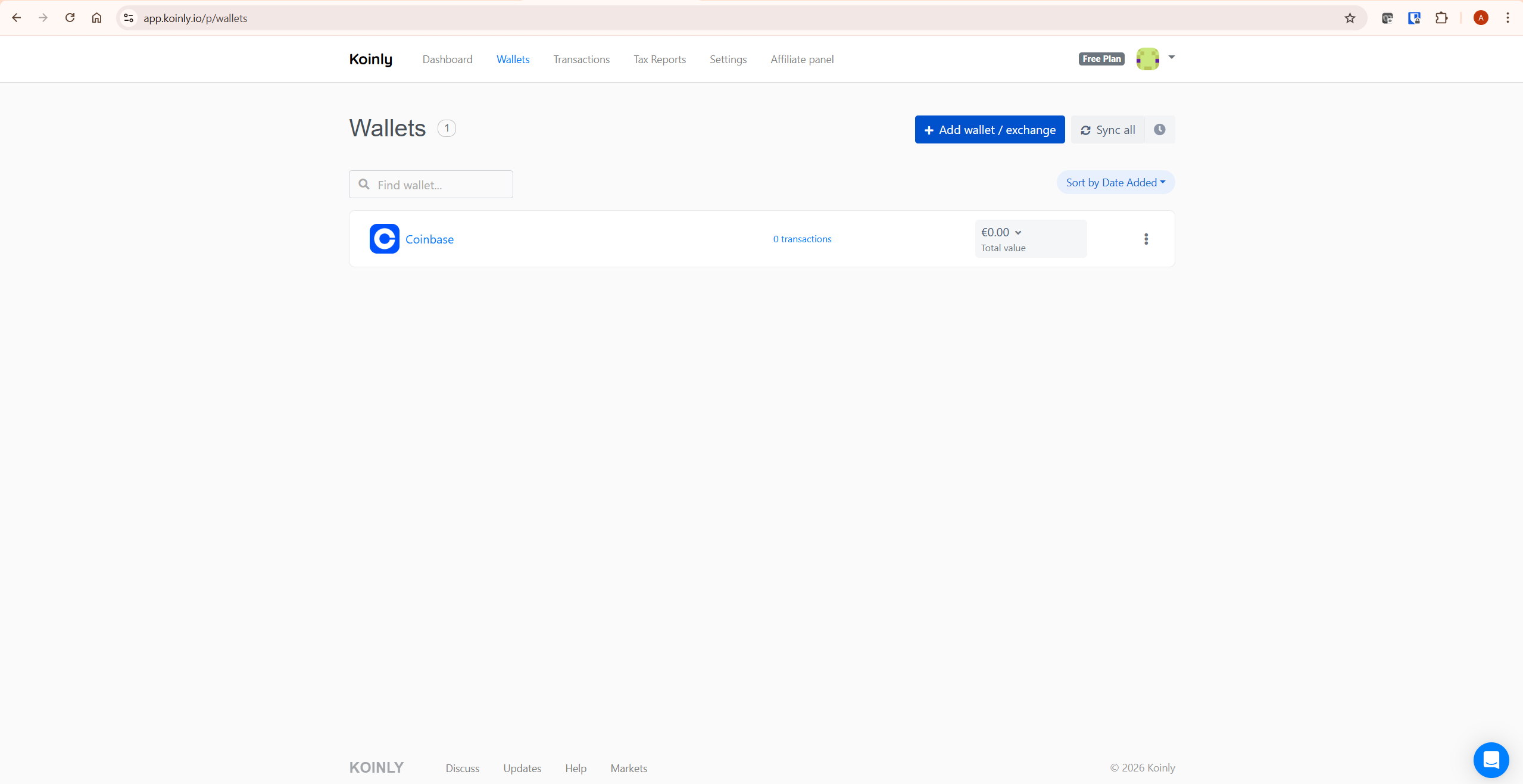
If one of the wallets involved in a transfer has not been added to your account, Koinly cannot recognise the movement as a same-owner transfer. It will instead record the transaction as a disposal with no proceeds — creating a phantom gain or a missing cost basis warning. This is not a calculation error. It is a data completeness issue. The platform is accurate on transfers when all wallets are connected.
Staking and Income: Mostly Automated, Verify Classifications
Staking rewards, mining income, and airdrop classification are handled correctly for most major protocols and exchanges. Staking rewards are recorded as income at the fair market value at the time of receipt — the correct tax treatment in the US, UK, Australia, and most EU jurisdictions. Each reward distribution is tracked individually, which matters for high-frequency staking protocols that distribute rewards daily.
There are known scenarios where staking rewards are imported as generic receive transactions rather than as income events. The fix is straightforward: filter your transactions for staking-related activity and verify each one is classified as Staking or Income rather than as a plain Receive or Transfer. A reward classified as a transfer does not appear in your income calculation — which understates your taxable income, a more serious error than overstating it.
DeFi Activity: Reliable for Common Protocols, Review Required for Complex Scenarios
For common DeFi activity on major protocols — token swaps on Uniswap, liquidity provision on Curve, staking on Lido — automated classification is reliable. Token swaps are correctly recorded as crypto-to-crypto trades. Wrapped token conversions such as ETH to WETH are identified as non-taxable in most jurisdictions. Gas fees are included in the relevant cost basis calculations.
For complex DeFi scenarios, manual review is required rather than passive acceptance of automated classifications. Auto-compounding yield farming strategies that reinvest rewards automatically generate individual taxable events at every compounding interval. Cross-chain bridge transactions involving less common protocols may be imported as unclassified events. Concentrated liquidity positions in protocols like Uniswap V3 have specific classification requirements that sometimes need manual adjustment.
New DeFi protocols can appear faster than any tax software can fully support them, so recently launched protocols may require additional manual review until support is updated. Compared to alternatives, Koinly handles more DeFi scenarios automatically than most competing tools at its price point, and its flagging system surfaces uncertainty for review rather than making silent assumptions. For the complete methodology on DeFi tax accuracy, our Koinly DeFi and NFTs guide covers every scenario in detail.
Why Users Report Wrong Numbers — The Four Real Causes
The disconnect between Koinly’s actual calculation reliability and negative user experiences almost always traces to one of four specific issues — none of which are calculation engine errors.
Missing wallet imports. This is the most common cause of incorrect gains figures. If an asset was acquired in a wallet that has not been added to Koinly, the platform cannot find the cost basis for that asset. When the asset is later sold, the gain is calculated from a zero cost basis — producing a dramatically inflated figure. The fix is simple: add the missing wallet. The gains figure typically corrects itself automatically once the data is complete.
Unresolved flagged transactions. Every transaction classified as Unknown or Needs Review is a transaction where Koinly has imported the data but cannot confidently classify the event type. These unresolved transactions can distort both gain and income calculations significantly. Working through every flag before generating any report is not optional — it is the most important step in getting an accurate result.
Wrong accounting method. The platform calculates correctly under the selected method — but the result is wrong for your jurisdiction if the wrong method has been selected. FIFO and HIFO produce different gain figures for the same transaction history. Verify your accounting method in Settings before generating any report.
Duplicate transactions. Importing the same transactions twice — once via API and once via CSV for the same exchange — inflates transaction counts and distorts gain calculations. Check your import sources and remove any overlapping connections. If problems persist after addressing all four issues, our Koinly showing wrong gains guide walks through the complete diagnostic process.
Tax Reports and Audit Readiness
When the setup and review process has been completed correctly, Koinly’s reports provide the transaction-level documentation that tax authorities expect to see.
The platform generates jurisdiction-specific reports that include every taxable event, the cost basis calculation for each disposal, the accounting method applied, and the resulting gain or loss. This transaction-level detail is what distinguishes a defensible tax filing from one that cannot be explained if questioned. Raw exchange exports do not provide this audit trail. A properly reviewed Koinly report does.
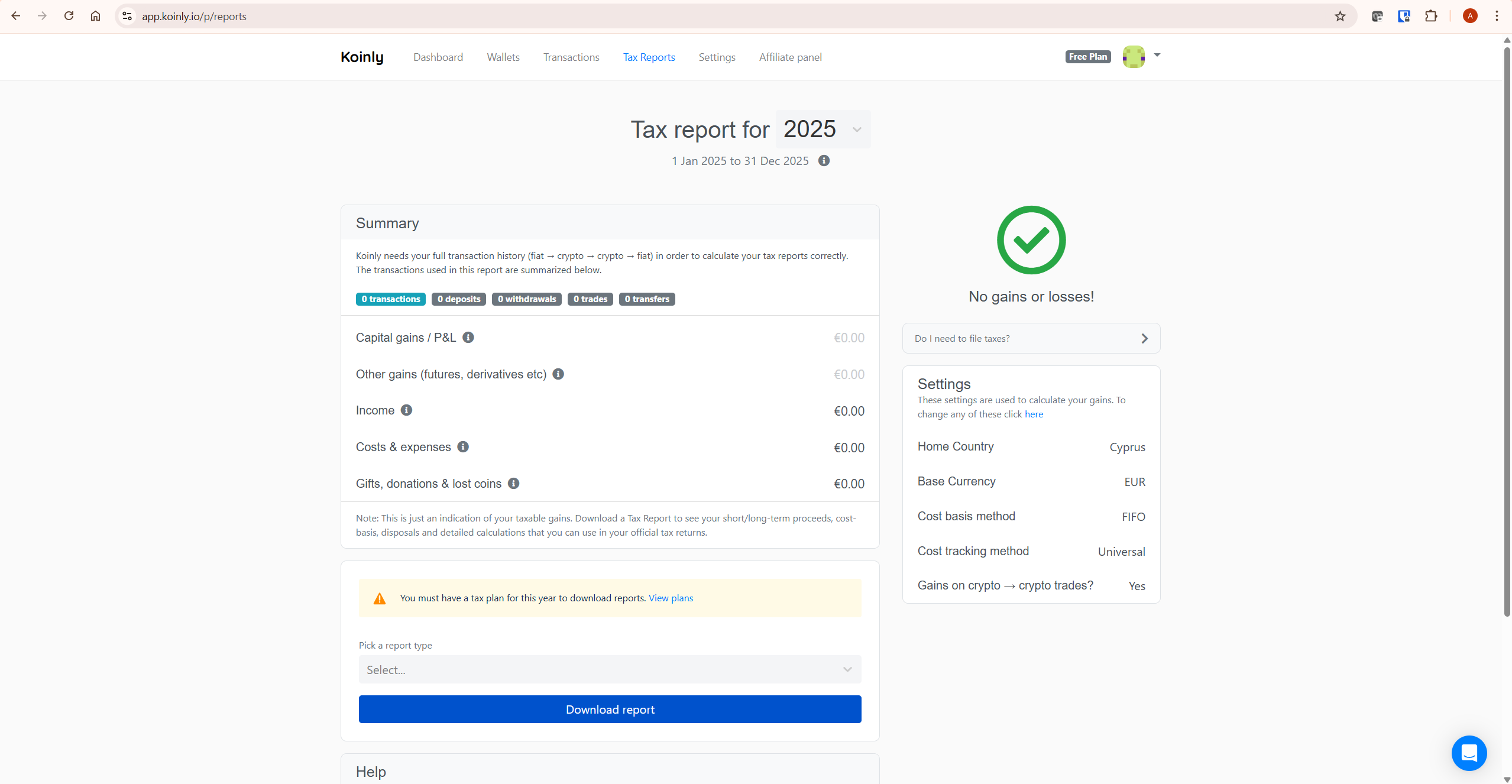
Many accountants who work with crypto investors accept Koinly exports as a starting point for preparing returns. The structured format, jurisdiction-specific report types, and transaction-level detail make collaboration with external accountants significantly more efficient than providing raw CSV files or exchange screenshots. For high-value or complex portfolios, a qualified tax professional should review the final report before filing — but Koinly’s output provides the organised documentation they need to do that efficiently.
How to Maximise Koinly’s Accuracy
For simple portfolios with one or two exchanges and no DeFi activity, Koinly is largely accurate by default. For anyone with more complex activity, maximum accuracy requires these specific steps.
Import every data source. Incomplete data is the single most common cause of wrong results. Every exchange, wallet, and blockchain address that has ever held your assets must be connected before reviewing any gain figures.
Resolve all flagged transactions. Work through every Unknown and Needs Review transaction before generating any report. Use the relevant block explorer for on-chain transactions to verify what actually happened.
Verify transfer classifications. Check that wallet-to-wallet movements are showing as Transfers rather than as disposals. Any transfer showing as a disposal with a gain almost always indicates a missing wallet on the receiving side.
Confirm income classifications. Verify each staking reward is classified as Staking or Income rather than as a plain Receive transaction.
Confirm your accounting method. Verify in Settings that the correct method for your jurisdiction has been selected before generating any report. For plan details and what each tier includes, our Koinly pricing guide covers the full breakdown.
What To Do Next
The most reliable way to answer the accuracy question for your specific situation is to import your data on the free plan and check it yourself before paying anything.
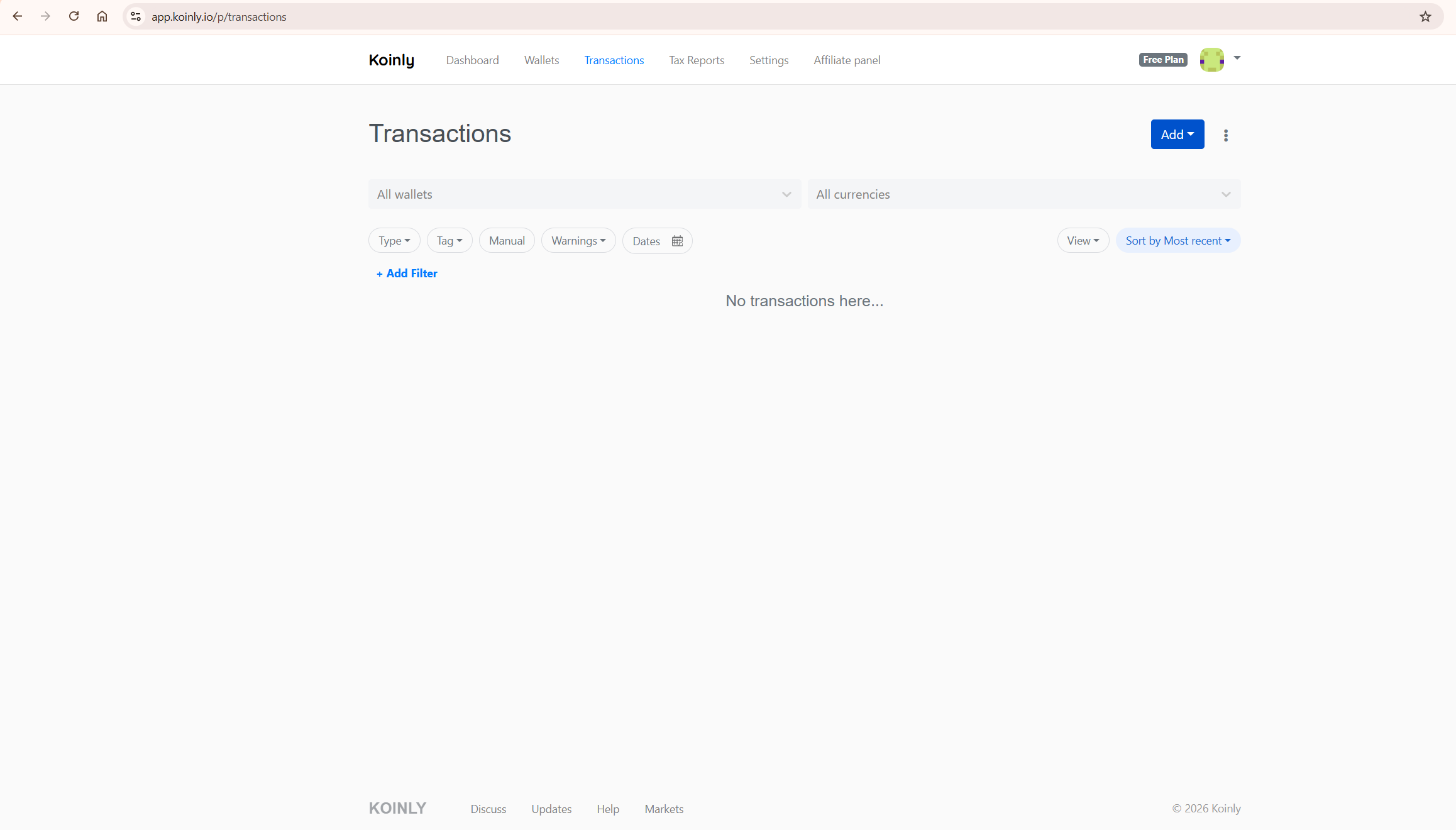
Create your free Koinly account, connect every exchange and wallet you have ever used, wait for the sync to complete, and then filter the Transactions tab by Warnings. The number of flagged transactions tells you how much manual review your portfolio requires. If flagged transactions are few and the gains figure looks reasonable, the platform is working correctly for your data. If flags are numerous, work through them before drawing any conclusions about accuracy.
Start with Koinly’s free plan here — import your data, review your gains, and evaluate the accuracy for your specific situation before committing to a paid plan. For the full platform evaluation, read our complete Koinly review.
Frequently Asked Questions
Is Koinly accurate for US tax reporting?
Yes — Koinly generates Form 8949 and Schedule D compatible reports for US investors, supports FIFO, HIFO, and LIFO accounting methods, and helps identify taxable events that generally require reporting under IRS guidance. The platform also supports the Spec ID method required for wallet-based cost tracking under new 1099-DA reporting rules. For most US investors with standard to moderate crypto activity, Koinly’s accuracy is sufficient for tax filing purposes when the full setup and review process has been completed.
Why does my Koinly gains figure look wrong?
The platform’s calculation is almost certainly correct given the data it has — but the data is almost certainly incomplete. The most common causes are missing wallet imports and unresolved flagged transactions. Add every missing wallet, resolve every flag, and the gains figure typically corrects itself. If the problem persists after completing both steps, our Koinly showing wrong gains guide walks through the specific diagnostic steps.
Is Koinly accurate enough to replace a tax accountant?
For investors with straightforward activity — exchange trading, staking, basic NFT transactions — yes, with careful review of the generated report. For investors with complex DeFi portfolios, high-value positions, or any uncertainty about how specific transactions should be classified under their jurisdiction’s rules, Koinly’s reports provide excellent documentation but professional tax advice adds a valuable second layer of verification. The two are complementary rather than alternatives.
Is Koinly accurate compared to CoinTracker?
Both platforms use similar core calculation methodologies, and accuracy at the calculation level is comparable. The practical difference is in the manual review interface — Koinly gives users more granular control over transaction classification, which means that when something needs correction, it is easier to fix accurately. For a detailed comparison across every relevant dimension, our Koinly vs CoinTracker guide covers the differences in depth.
Does Koinly handle the IRS per-wallet cost basis rules?
Yes — Koinly supports the Spec ID method required for per-wallet cost basis tracking under Rev. Proc. 2024-28, which applies to transactions on or after January 1, 2025. US investors filing for 2025 and later years should confirm their cost basis method is set correctly in Koinly’s Settings before generating their report. For any uncertainty about how these rules apply to your specific situation, consult a qualified tax professional familiar with the 2025 IRS digital asset reporting changes.
Can Koinly make mistakes?
Yes — but the mistakes are almost always traceable to specific causes rather than random calculation errors. The most common sources of wrong results are missing wallet imports that leave cost basis gaps, API limitations that prevent full transaction history from being pulled, unsupported or newly launched DeFi protocols that import as unclassified events, and incorrect transaction classifications that distort income or gains figures. In each case the fix is targeted rather than a complete reimport — identify the specific cause, correct it, and the calculation updates automatically.
Related Koinly Guides
Koinly vs CoinTracker: Which Crypto Tax Software Is Better in 2026?
Koinly Review: Is It the Best Crypto Tax Software in 2026?
Koinly Showing Wrong Gains? How to Fix Cost Basis Errors
Koinly for DeFi and NFTs: How Well Does It Handle Complex Crypto?
