
Koinly Staking Taxes: Best Complete 2026 Guide (Mining & Airdrops)
Affiliate disclosure: InnovateHub Finance may earn a commission if you sign up to Koinly through links on this page, at no extra cost to you.
This article is for informational purposes only and does not constitute professional tax or financial advice. Tax laws vary by country and change frequently. Consult a qualified tax professional for advice specific to your situation.
Last verified: August 2026, using Koinly’s official documentation and support articles, and IRS Revenue Ruling 2023-14.
Koinly Staking Taxes: Why This Trips Up Even Careful Investors
You staked some ETH, earned a few airdrops, and maybe mined a bit of a smaller coin on the side. Now Koinly has imported everything, but your income totals look wrong, and you’re not sure whether that’s a Koinly problem or a “you didn’t tag something correctly” problem. Koinly staking taxes, along with mining and airdrop income, are the single biggest source of misreported crypto income I see, because each one has its own taxable moment and its own tag inside the platform.
I’m Andreas Maratheftis. I spent 30 years as a Finance Director and Group CFO before I started writing about crypto tax tools, and the pattern I keep seeing is the same: people trust Koinly’s automatic import, but they never check whether the platform tagged their staking, mining, and airdrop transactions the way their tax office actually requires.
Get the tag wrong and your tax report is wrong, even though every transaction imported correctly. For the full picture of what Koinly does well and where it falls short, my complete Koinly review covers the platform end to end.
Key Takeaways
- Staking rewards are taxable the moment you have “dominion and control” over them, per IRS Revenue Ruling 2023-14 — not when they’re earned, but when you can actually sell or move them.
- Koinly controls staking, mining, airdrop, and fork income with one shared setting: the “Treat rewards as income” toggle, which behaves identically across all four tags.
- Mining is taxed differently depending on whether it’s a hobby or a business — the distinction changes which IRS form you use and what you can deduct.
- Airdrops are taxed at fair market value on the day you receive them, and that value becomes your cost basis for any later sale.
- The most common Koinly error isn’t a software bug — it’s an untagged or mistagged wallet, which either overstates or understates your income without any warning.
Quick Answer: How Does Koinly Handle Staking, Mining, and Airdrop Taxes?
Koinly staking taxes work through four separate tags — Reward, Mining, Airdrop, and Fork — all controlled by one setting called “Treat rewards as income.” When it’s on, Koinly adds the fair market value of each reward to your taxable income and uses that same value as your cost basis. Most exchange-based staking imports and tags automatically; on-chain staking, mining, and manual airdrops usually need a quick manual check.
How Koinly Tags Staking, Mining, and Airdrop Income
Before getting into how each type of income is taxed, it helps to understand how Koinly treats them internally, because all three share the same underlying mechanism.
Wallet Import
↓
Correct Tag Applied (Reward / Mining / Airdrop / Fork)
↓
Income Recorded at fair market value on receipt
↓
Cost Basis Created for that asset
↓
Capital Gain or Loss calculated automatically when you sell
One wrong tag at step 2 throws off every step after it — which is why the tagging step below matters more than people expect.
The One Toggle That Controls Everything
Koinly has a single settings toggle — “Treat rewards as income” — that applies identically to four tags: Reward, Airdrop, Fork, and Mining. When the toggle is on for a given tag, the fair market value of the deposit is added to your income total for the year, and that same value becomes the cost basis for the asset. When the toggle is off, you report no income at receipt, but your eventual capital gain (or loss) on disposal is larger, because your cost basis starts at zero.
This matters because the correct setting depends entirely on your country’s tax rules, not on Koinly’s default. Koinly sets a recommended default per country when you first set up your account, but it’s worth checking rather than assuming, especially if your tax office has published new guidance since you signed up.
Automatic Tagging vs. Manual Tagging
If you’re staking through a centralized exchange like Binance or Kraken, Koinly typically imports and tags your rewards automatically. Mining through a pool such as NiceHash usually works the same way once you import your transaction file.
On-chain staking, direct mining, and manually added airdrops are a different story. For a wallet used exclusively for mining, Koinly’s own guidance recommends setting “Tag deposits as” to Mining, which auto-tags every incoming deposit into that wallet. If the wallet also receives other deposits, that shortcut backfires and mistags unrelated transfers as income, so it only works cleanly on a single-purpose wallet.
Check how Koinly handles your specific wallets here.

When Are Staking Rewards Taxable Under Koinly Staking Taxes Rules?
In the US, the IRS settled this question in July 2023 with Revenue Ruling 2023-14. Staking rewards are included in your gross income for the tax year in which you gain “dominion and control” over them — in plain terms, the point at which you’re actually free to sell, transfer, or otherwise use the tokens.
What “Dominion and Control” Actually Means
This standard applies whether you stake directly on-chain or through a centralized exchange. The ruling matters most for lockup periods: if your rewards accrue but stay locked, they aren’t taxable until the lockup ends and you can actually move them. Rewards that hit your exchange balance immediately are taxable immediately, at their fair market value the moment they land.
A Worked Example
Say you stake ETH and receive 0.05 ETH in rewards on a day when ETH trades at $3,200. That reward is $160 of ordinary income on that date, reported on Schedule 1 (or Schedule C if staking is a business for you). This is the core arithmetic behind Koinly staking taxes — value at receipt becomes both your income and your cost basis.
Your cost basis in that 0.05 ETH is now $160. If you later sell it when ETH is at $3,600, you owe capital gains tax on the $20 gain (0.05 × $3,600 minus the $160 basis), reported separately on Form 8949 and Schedule D.
Run this calculation for every reward across a full year of staking and you’ll see immediately why manual tracking becomes unworkable — it’s exactly the kind of repetitive fair-market-value lookup Koinly automates once your wallets are tagged correctly. If you’re also untangling cost basis errors elsewhere in your account, my Koinly cost basis guide walks through the per-wallet method in more detail.
Do Exchanges Report Staking Rewards?
Major US exchanges commonly issue Form 1099-MISC once your staking rewards cross roughly $600 in a year, though the exact practice varies by platform and isn’t fixed by a single IRS rule. This threshold only affects whether you receive a form — it does not create a tax-free allowance. Every dollar of staking income is reportable regardless of whether a 1099-MISC arrives, and it’s separate from the disposals reporting that now happens through Form 1099-DA — see my Koinly Form 1099-DA guide if you’re untangling the two.
How Mining Income Is Taxed and Tagged in Koinly
Mining follows the same income-at-receipt principle behind Koinly staking taxes, but the reporting path depends on scale.
Hobby Mining vs. Business Mining
If you’re mining casually on a single rig, it’s typically treated as hobby income, reported on Schedule 1. If you’re running a mining operation with a genuine profit motive — multiple rigs, dedicated infrastructure, real business records — it moves to Schedule C, and that reclassification unlocks the ability to deduct expenses like electricity and hardware. That’s a meaningful difference, and it’s worth a conversation with a tax professional if you’re anywhere near that line.
In Koinly, mining income is set up the same way as staking: tag the wallet, confirm the “treat as income” toggle matches your situation, and let the platform value each reward at the fair market value on the day it landed in your wallet.
How Airdrops Are Taxed and Tagged in Koinly
Airdrops are the messiest of the three income types covered under Koinly staking taxes, because tax treatment depends on why you received the tokens, not just that you received them.
Earned Airdrops vs. Unsolicited Airdrops
In the US, the IRS treats airdrops as ordinary income at the fair market value on the day you receive them, reportable regardless of whether you took any action to earn them. That fair market value becomes your cost basis, so if you later sell the tokens for more, you owe capital gains tax on the difference; sell for less, and you have a capital loss to offset other gains.
Koinly’s Airdrop tag applies this logic automatically once the toggle is set correctly. The practical failure point is airdrops that land in a wallet Koinly doesn’t recognize as yours, or ones added manually without a tag — those show up as unexplained deposits rather than income, which throws off both your income total and your cost basis tracking for every future disposal.
Koinly Staking Taxes vs. Mining vs. Airdrops: Tax Treatment at a Glance
| Income Type | Taxable Event | Where Reported (US) | Koinly Tag |
|---|---|---|---|
| Staking rewards | When you gain dominion and control (usually on receipt) | Schedule 1, or Schedule C if a business | Reward |
| Mining income (hobby) | On receipt, at fair market value | Schedule 1 | Mining |
| Mining income (business) | On receipt, at fair market value | Schedule C, with deductible expenses | Mining |
| Airdrops | On receipt, at fair market value | Schedule 1 (as other income) | Airdrop |
| Later sale of any of the above | On disposal, gain or loss vs. cost basis | Form 8949 and Schedule D | N/A — handled automatically once income is tagged |
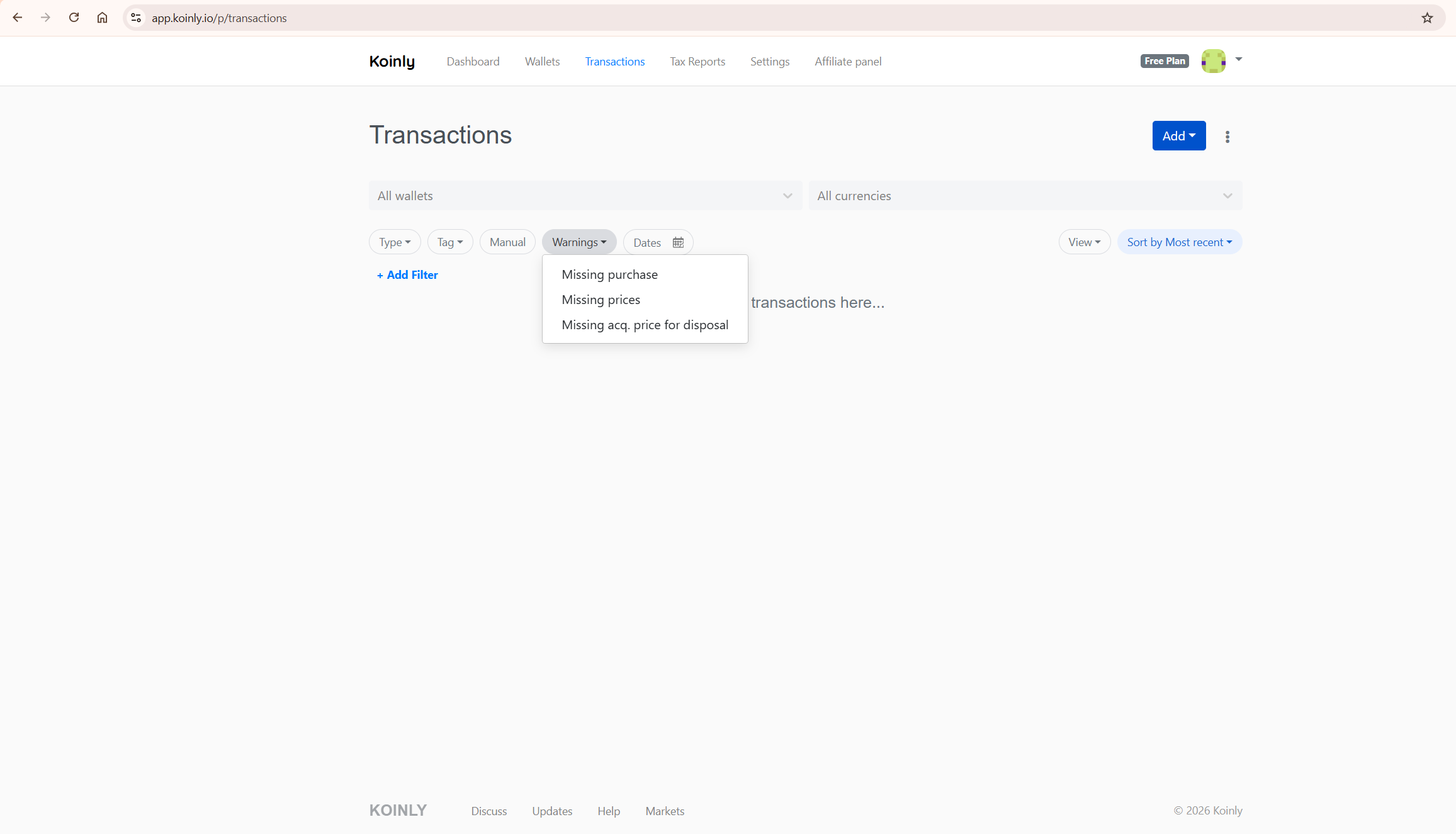
Watch for this: a wallet that receives both staking rewards and unrelated transfers will mistag everything as income if you use the wallet-level “tag deposits as” shortcut. Use it only on wallets dedicated to a single income type, and tag mixed wallets transaction-by-transaction instead.
Common Tagging Mistakes That Inflate or Deflate Your Tax Bill
Most Koinly staking taxes errors trace back to one of four tagging mistakes.
| Symptom | Likely Cause | Fix |
|---|---|---|
| Income total looks too high | Mixed-use wallet auto-tagged every deposit as income, including transfers between your own wallets | Untag the wallet-level shortcut; tag transactions individually or mark internal transfers as such |
| Income total looks too low | On-chain staking or manual airdrop deposits weren’t recognized and imported as plain deposits with no tag | Locate the transactions and manually apply the Reward, Mining, or Airdrop tag |
| Cost basis missing warning | The “treat as income” toggle is off for a tag where your jurisdiction requires it on | Check the toggle setting against your country’s current tax guidance |
| Same reward appears twice | Reward was imported from both the exchange API and a manually added wallet | Remove the duplicate source; keep only one import path per wallet |
Staking, Mining, and Airdrop Taxes Outside the US
Every country I’ve mentioned so far follows US rules, and yours may not. Koinly staking taxes vary significantly by jurisdiction — some countries tax rewards as income on receipt like the US, others tax only on eventual disposal, and the classification of “business” versus “hobby” mining differs too. I cover the UK, Germany, Australia, and Canada in dedicated guides, since each has genuinely different rules that deserve their own explanation rather than a shortened summary here.
If you’re outside the US, start with my Koinly UK tax guide, Koinly Germany tax guide, Koinly Australia tax guide, or Koinly Canada tax guide instead of assuming the US treatment above applies to you.
For the underlying US rule itself, the IRS’s own virtual currency guidance is the definitive source, and UK readers should check HMRC’s cryptoassets manual directly rather than relying on any single article, including this one.
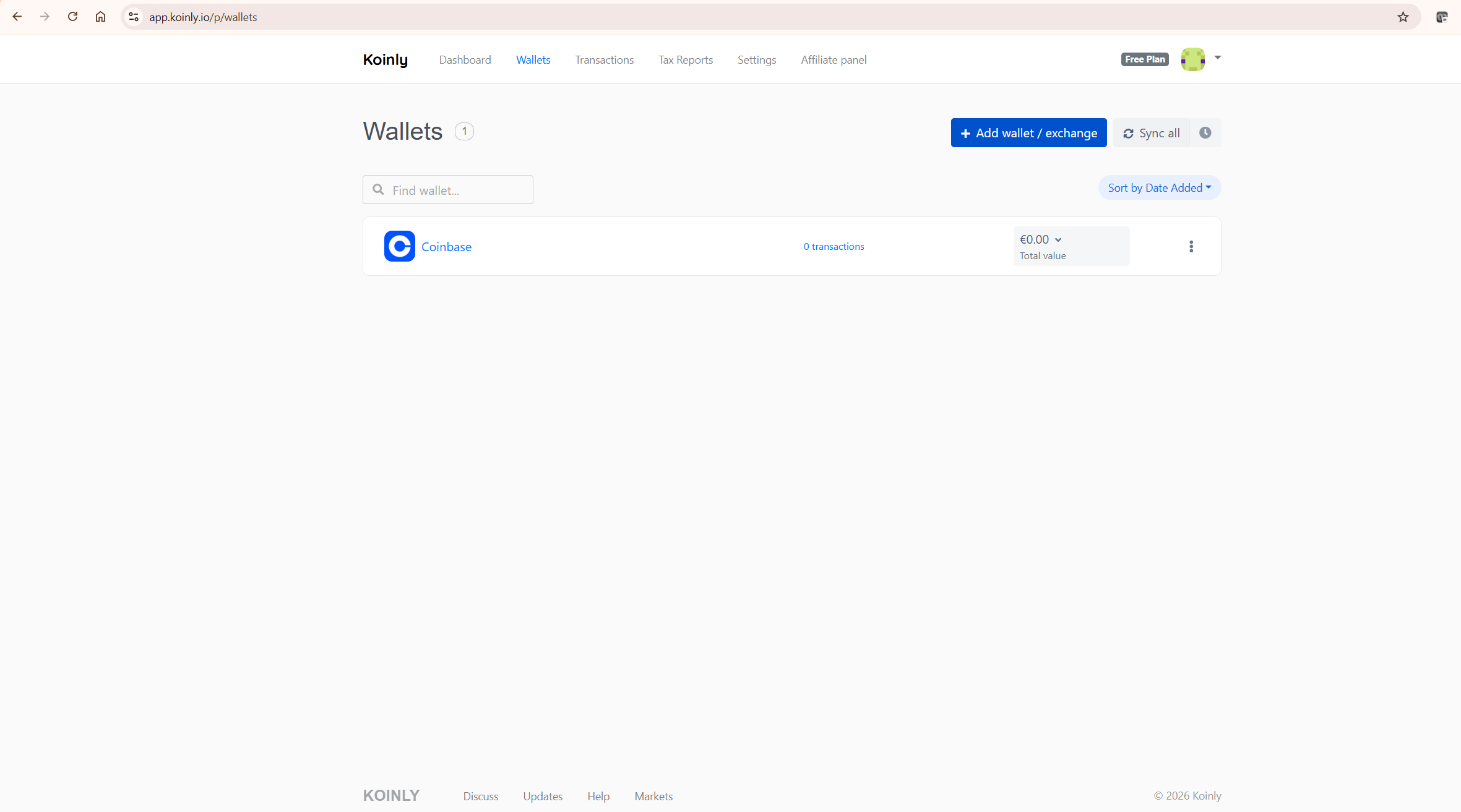
One honest limitation worth naming: Koinly can’t know your intent. It doesn’t know whether your mining counts as a hobby or a business in the eyes of your tax office, and it doesn’t know whether a specific airdrop was “earned” through an action or dropped on you unsolicited. Those judgment calls sit with you and your tax professional — Koinly only calculates correctly once you’ve made them and tagged accordingly.
See how Koinly’s tagging system handles your wallets.
What to Do Next
Open your Koinly account and go to the Transactions tab — this is the fastest way to audit your own Koinly staking taxes setup. Filter by wallet and check every staking, mining, or airdrop source for the correct tag — Reward, Mining, or Airdrop — rather than trusting that the import got it right automatically.
Next, open Settings and confirm the “treat as income” toggle matches your country’s current guidance for each tag. Then check the Warnings filter for any flagged missing cost basis issues, which usually point straight at an untagged reward. This takes about 15 to 20 minutes for most portfolios and catches the majority of staking, mining, and airdrop tax errors before they reach your final report.
Frequently Asked Questions
Are staking rewards taxed twice?
Not exactly, but it can feel that way. You pay income tax once, when you receive the reward, based on its value that day. If you later sell it for more, you pay capital gains tax on the increase only — not on the original amount again.
This two-stage structure is central to how Koinly staking taxes work across every jurisdiction that treats staking as income.
Does Koinly automatically detect all staking rewards?
Exchange-based staking usually imports and tags automatically. On-chain staking through a wallet or validator often doesn’t, and needs a manual tag check, especially on wallets that also handle regular transfers.
What happens if I don’t tag my mining income correctly in Koinly?
Your income total and cost basis will both be wrong. If mining deposits are untagged, Koinly may treat them as a zero-cost acquisition, which understates your income now but inflates your capital gain when you eventually sell.
Is an airdrop taxable if I never asked for it?
In the US, generally yes — the IRS treats airdrops as income on receipt regardless of whether you took any action to get them. Some other countries draw a line between earned and unsolicited airdrops, so check your local jurisdiction guide rather than assuming the US rule applies.
Can I turn off income tax treatment for staking rewards in Koinly?
Yes, the toggle is available, but turning it off doesn’t make the income disappear from a tax perspective — it just shifts a larger capital gain to the point of sale. Whether that’s appropriate depends entirely on your jurisdiction’s actual rules, not on personal preference.
Do I owe tax on staking rewards I haven’t sold yet?
In the US, yes — the taxable event under Koinly staking taxes rules is receiving dominion and control over the reward, not selling it. Many investors are surprised by this, since they’re used to gains only being taxed on sale.
Why does my Koinly income total change after I re-tag a transaction?
Because the tag determines both the income entry and the cost basis simultaneously. Re-tagging a deposit from “unrecognized” to “Reward,” for example, adds it to income and sets its cost basis, which can shift both your income total for that year and any future capital gain calculation.
Final Verdict
If I had to summarise Koinly staking taxes in one sentence: the platform gets the calculation right automatically once you get the tagging right manually, and the two are not the same job. Koinly solves the fair-market-value lookups and the ongoing capital gains tracking — genuinely tedious work to do by hand across a full year of rewards.
It doesn’t solve knowing which wallets are staking, mining, or receiving airdrops, and it can’t make the hobby-versus-business call for you. If you’re still deciding whether Koinly is the right platform at all, my full Koinly review covers the pricing, accuracy, and security questions this article doesn’t.
My honest caveat: if your portfolio spans several wallets and reward types, budget real time to check tags rather than trusting the import blindly. Getting Koinly staking taxes right, along with mining and airdrop tagging, is a one-time setup cost that saves hours every filing season after. Do that once, correctly, and the platform earns its keep every year after.
Start tracking your staking, mining, and airdrop income with Koinly.
